
Webinar on automation in catalysis
Join us for a webinar on automation in catalysis with Prof. Timothy Noël (University of Amsterdam) and Dr. Gilian Thomas (University of Leeds). This webinar is co-hosted with the Applied Catalysis Group (ACG) and chaired by Dr. Ben Bhawal (University of Edinburgh).
To register for free visit https://www.eventbrite.co.uk/e/webinar-on-automation-in-catalysis-tickets-2003338210516?_gl=1*r7lw8a*_up*MQ..*_ga*MTk0NTE1NDA0Mi4xNzkyNDEyMDAx*_ga_TQVES5V6SH*czE3OTI0MTIwMDAkbzEkZzEkdDE3OTI0MTI5MDUkajYwJGwwJGgw&aff=oddtdtcreator&keep_tld=true
Tech-Enhanced Synthetic Organic Chemistry - Prof. Timothy Noël
The world of synthetic organic chemistry has made significant strides in discovering new medicines, materials, and fine chemicals. However, there is a major aspect that has been overlooked for years: the reactor itself. In this lecture, we will explore how flow chemistry, sometimes in combination with automation and robotics, can fundamentally transform the way synthetic organic chemistry is performed.
By harnessing the power of flow chemistry, chemists can unlock unique reactivity and selectivity, enabling them to push the boundaries of what is synthetically possible. Not only does flow chemistry make new synthetic routes achievable, it can fast-track them from the lab to large scale production.
In our research group, we develop automated, flow-based, and robotic chemical platforms that reduce manual labor, improve reproducibility, and accelerate reaction discovery. By integrating flow reactors with robotics, inline analytics, and algorithm-driven optimization, we are building robochemical systems capable of performing experiments autonomously and continuously learning from data. These technologies enable faster exploration of reaction space while minimizing human intervention.
Our research spans a broad range of methodological developments, including photocatalysis, fluorine chemistry, electrochemistry and bioconjugation chemistry, all empowered by advanced flow and robotic platforms. In this talk, we will showcase how the synergy between flow chemistry, automation, and robotic experimentation enables more efficient synthesis, faster discovery of new reactions, and more sustainable chemical processes.
Ultimately, this lecture aims to demonstrate how technological innovation can elevate synthetic organic chemistry to a new paradigm, inspiring chemists to adopt these tools and unlock new possibilities for reaction development and chemical manufacturing.
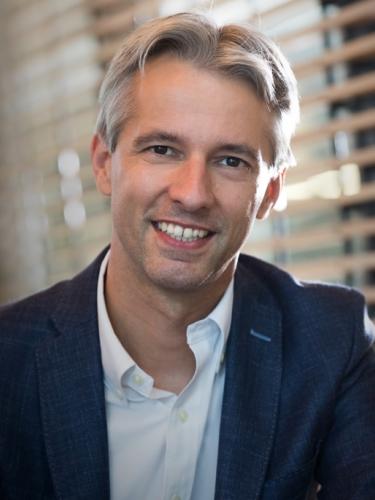
Timothy Noël (University of Amsterdam) is a leading researcher in synthetic organic chemistry and technology, focusing on the synergy between these fields. He earned his MSc in Industrial Chemical Engineering in 2004 and completed his PhD in synthetic organic chemistry at Ghent University in 2009. As a Fulbright Postdoctoral Fellow, he worked with Prof. Stephen L. Buchwald at MIT, gaining expertise in flow chemistry.
In 2012, he joined Eindhoven University of Technology as an Assistant Professor, becoming Associate Professor in 2017. Since 2020, he has been Full Professor and Chair of Flow Chemistry at the University of Amsterdam. His work has earned numerous honors, including the DECHEMA Award (2017), IUPAC-ThalesNano Flow Chemistry Award (2020), KNCV Gold Medal (2021), ERC Consolidator Grant (2022), NWO Vici Grant (2025), completing the rare Veni-Vidi-Vici distinction, and most recently, the Prous Institute - Overton and Meyer Award for New Technologies in Drug Discovery (2026)
Prof. Noël serves as Editor-in-Chief of the Journal of Flow Chemistry and President of the Flow Chemistry Society.
Automation of post-reaction work-up for batch High-Throughput Experimentation (HTE) - Dr. Gilian Thomas
High throughput experimentation (HTE) has transformed reaction discovery and optimization, but post-reaction workup remains a common barrier to fully automated workflows. This webinar will highlight practical strategies for automating reaction workup using commercially available liquid handling platforms, including approaches for filtration, phase separation, and aqueous washing. Through case studies in catalytic cross-coupling and borylation chemistry, attendees will learn how automation can improve reproducibility, increase throughput, reduce hands-on effort, and enable more efficient HTE campaigns in both academic and industrial settings.
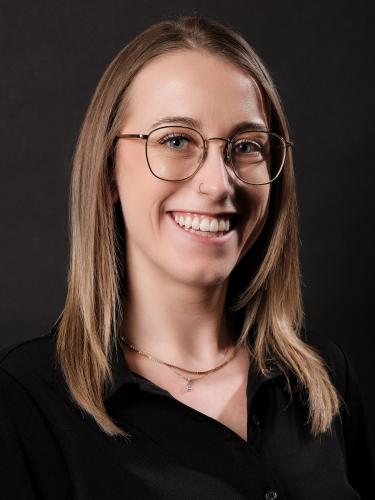
Dr. Gilian Thomas (University of Leeds). Gilian earned her PhD at the University of Victoria under the supervision of Professor Scott McIndoe, primarily focused on real-time reaction monitoring of catalytic reactions using mass spectrometry. During this time, she received an award to work with Professor Guy Lloyd-Jones at the University of Edinburgh studying reaction mechanisms using NMR. In 2022, she went on to conduct postdoctoral research at the University of Ottawa with Professor Stephen Newman, working on nickel catalysis, reaction discovery using high-throughput experimentation (HTE), as well as flow chemistry. In 2023, she undertook postdoctoral research at the University of Victoria with Professor David Leitch and the Gates Foundation, developing innovative Ni precatalysts for HTE, with applications in sustainable pharmaceutical production. In September 2024, Gilian joined the School of Chemistry at the University of Leeds as a Lecturer (Assistant Professor) in Sustainable and Digital Chemistry.